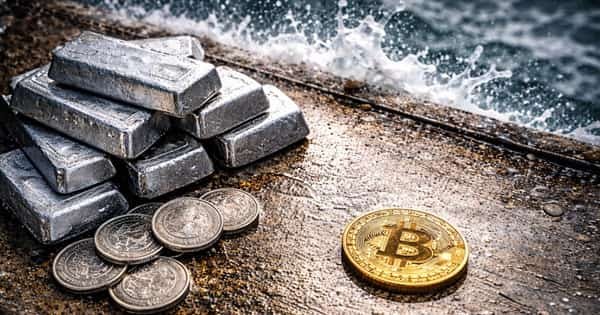
Cryptocurrency and silver are very different investment assets, so deciding which is better depends on an investor’s goals, risk tolerance and investment horizon. Silver is a physical precious metal with thousands of years of monetary and industrial use, while cryptocurrency is a relatively new digital asset class built around blockchain technology. Silver generally offers a more established store-of-value proposition, whereas cryptocurrencies such as Bitcoin offer greater potential for capital appreciation but substantially higher volatility.
For Indian investors, the comparison also involves taxation, accessibility, storage, regulation and the different factors that drive prices.
What Is Silver as an Investment?
Silver is both a precious metal and an industrial commodity. Investors can gain exposure through physical silver such as bars and coins, as well as financial products such as silver ETFs and other market-linked instruments.
Unlike gold, silver has a significant industrial role. It is used in electronics, electrical applications, solar technology, automobiles and other industrial products. According to the Silver Institute, global industrial silver demand reached 657.4 million ounces in 2025, despite declining 3% from the previous year. Demand continued to benefit from areas such as AI infrastructure, automotive applications and power-grid investment.
This industrial component can influence silver prices differently from traditional monetary assets.
What Is Cryptocurrency?
Cryptocurrency is a digital asset that uses blockchain or related distributed-ledger technology. Bitcoin is the best-known example, while thousands of other crypto assets exist.
Cryptocurrencies can be bought, sold and transferred digitally through platforms and wallets. Their prices are influenced by factors such as market sentiment, adoption, liquidity, regulation, technology and broader financial-market conditions.
Unlike silver, cryptocurrency has no physical form. It also has a relatively short market history, meaning investors have less long-term evidence about how different crypto assets behave during prolonged inflation, recessions and financial crises.
Cryptocurrency vs Silver: Key Differences
| Factor | Silver | Cryptocurrency |
| Asset type | Precious metal and industrial commodity | Digital asset |
| History | Thousands of years | Relatively new |
| Volatility | Moderate to high | Very high for many crypto assets |
| Physical form | Yes | No |
| Industrial use | Significant | Generally no direct industrial use |
| Income | No regular income from holding | Generally no regular income from holding |
| Storage | Physical storage or financial product | Wallet or custodial platform |
| Main drivers | Industrial demand, investment, supply and inflation | Adoption, sentiment, regulation, technology and liquidity |
| Risk level | Lower than most cryptocurrencies | High to very high |
| Investment role | Diversification and precious-metal exposure | Higher-risk growth/speculative exposure |
Which Has Higher Return Potential?
Cryptocurrency generally has greater potential for rapid capital appreciation, particularly when investors choose an asset that experiences strong adoption or market demand.
Bitcoin’s historical performance has attracted investors seeking substantial long-term growth. However, past performance does not guarantee future returns, and the cryptocurrency market can experience severe corrections.
Silver can also deliver strong returns. In fact, silver experienced an exceptional period recently. The Silver Institute reported that the metal’s annual average price rose 42% in 2025, while prices reached an all-time high above $121 per ounce in January 2026 before falling sharply.
This illustrates an important point: silver is not a low-volatility asset simply because it is a precious metal. It can experience substantial price movements too.
Which Is More Volatile?
Cryptocurrency is generally much more volatile than silver.
Major cryptocurrencies can rise or fall dramatically within days or even hours. Smaller crypto assets can experience even larger movements and may have lower liquidity.
Silver also experiences volatility because it combines investment demand with industrial consumption. Changes in economic growth, manufacturing activity, interest rates, currency values and investor sentiment can influence its price.
For example, the Silver Institute expects silver to remain volatile in 2026 while forecasting a sixth consecutive annual market deficit.
Therefore, investors who cannot tolerate substantial short-term losses may find silver easier to hold than cryptocurrency.
Silver Has an Industrial Advantage
One of the biggest differences between the two assets is real-world industrial demand.
Silver is used in electronics, electrical equipment, solar photovoltaic systems, automotive applications and power infrastructure. India’s silver industrial demand was 38.1 million ounces in 2025, with electrical and electronics applications accounting for 17.6 million ounces.
This creates an additional source of demand beyond investment.
Cryptocurrency, by contrast, derives its value primarily from factors such as network adoption, scarcity characteristics, utility, investor demand and market confidence rather than physical industrial consumption.
Which Is Better for Inflation Protection?
Silver has traditionally been viewed as a precious-metal hedge against currency depreciation and inflation. Its physical nature and limited natural supply can make it attractive when investors are concerned about purchasing power.
However, silver does not always move in the same way as inflation. Because it has substantial industrial demand, a slowdown in economic activity can sometimes weaken demand even when inflation remains elevated.
Cryptocurrency is sometimes presented as a hedge against inflation, particularly Bitcoin because of its predetermined supply characteristics. However, its short history and high volatility make this claim much less established than the traditional inflation-hedging role of precious metals.
Investors should therefore avoid assuming that Bitcoin will always behave like silver or gold during inflationary periods.
Liquidity and Accessibility
Both assets can be relatively accessible to retail investors.
Silver can be purchased physically through coins and bars or through financial products such as silver ETFs. Physical silver, however, involves storage, security and transaction-cost considerations.
Cryptocurrency can generally be bought and sold digitally, often with relatively low barriers to entry. However, accessibility should not be confused with safety. Investors must consider the reliability of the platform, custody arrangements, cybersecurity and applicable regulations.
Taxation in India
Tax treatment is an important consideration for Indian investors.
The Income Tax Department states that gains from Virtual Digital Assets (VDAs) are subject to a 30% tax under Section 115BBH, along with applicable surcharge and 4% cess. VDA income is reported through the relevant Schedule VDA in ITR-2 or ITR-3.
Silver taxation depends on the form in which it is held and the applicable tax rules. Physical silver and financial products linked to silver can have different tax and transaction-cost implications.
Investors should therefore calculate post-tax returns, rather than comparing only the pre-tax price appreciation of silver and cryptocurrency.
Silver vs Cryptocurrency: Advantages and Disadvantages
Silver Advantages
- Long history as a store of value
- Significant industrial demand
- Physical asset with tangible utility
- Generally less volatile than cryptocurrency
- Can diversify traditional investment portfolios
- Available through physical and financial investment routes
Silver Disadvantages
- Does not generate regular interest or dividends
- Physical silver requires storage and security
- Buying and selling physical silver can involve premiums and transaction costs
- Prices can be affected by industrial slowdowns
- High recent prices can increase volatility
Cryptocurrency Advantages
- High potential for capital appreciation
- Digital and easily transferable
- Accessible through online platforms
- Blockchain technology offers potential financial applications
- Major cryptocurrencies can have substantial global liquidity
Cryptocurrency Disadvantages
- Very high volatility
- Significant possibility of capital loss
- Cybersecurity and custody risks
- Regulatory and compliance risks
- Tax treatment can reduce post-tax returns
- Many smaller crypto assets carry considerably greater risk than established cryptocurrencies
Which Is Better for Long-Term Investors?
For an investor prioritising relative stability, diversification and exposure to precious metals, silver may be the more suitable choice.
For an investor with a high risk tolerance who wants exposure to a digital asset class and accepts the possibility of substantial losses, cryptocurrency may offer greater growth potential.
However, investors do not necessarily have to choose only one.
A diversified portfolio could potentially contain different asset classes serving different purposes. Silver could provide precious-metal and industrial-commodity exposure, while a limited cryptocurrency allocation could provide exposure to digital assets.
The appropriate allocation depends on the investor’s financial position, goals and ability to tolerate losses.
Who Should Consider Silver?
Silver may be more appropriate for investors who:
- Want exposure to precious metals
- Prefer tangible assets
- Have moderate risk tolerance
- Want diversification beyond equities and fixed-income investments
- Are interested in the long-term industrial demand for silver
It may also appeal to investors who want precious-metal exposure but cannot or do not want to allocate as much capital to gold.
Who Should Consider Cryptocurrency?
Cryptocurrency may be more appropriate for investors who:
- Understand blockchain and digital assets
- Can tolerate substantial volatility
- Have a long-term investment horizon
- Can afford to lose a significant portion of the invested capital
- Understand taxation and regulatory considerations
It should generally not be treated as a substitute for emergency savings or essential financial goals.
So, Which Is Better?
There is no universally better asset.
Silver is an established precious metal with both investment and industrial demand. Cryptocurrency is a newer and substantially more volatile asset class with potentially greater upside as well as greater downside.
If the priority is relative stability, diversification and tangible precious-metal exposure, silver may be the better fit.
If the priority is higher-risk growth potential and exposure to digital assets, cryptocurrency may be more attractive.
The decision should ultimately be based on the investor’s risk tolerance rather than whichever asset has recently delivered the highest return.