A mushroom-growing room can look very different from a conventional farm. Shelves replace open fields, growing bags occupy a small space, and careful control of moisture and cleanliness shapes the crop. This makes mushroom cultivation appealing to people who have limited land but are willing to learn a precise production process. It also raises a reasonable question: does growing food indoors require a special business licence?
Cultivating ordinary edible mushrooms is legal in India. Mushroom production is an established activity supported by agricultural research and training institutions. The permissions that matter depend on where the unit operates and whether the business only grows mushrooms or also processes, packs, trades or sells them through a separate retail operation.
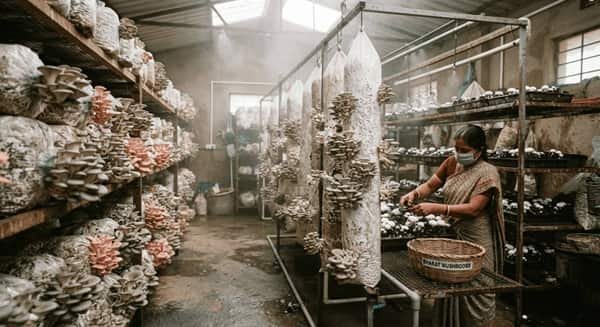
A sound plan therefore considers both the growing room and the route to the customer. Permission for one part of the business should not be assumed to cover every later addition.
Growing Mushrooms Is an Established Farming Activity
Indian agricultural institutions provide research, spawn and cultivation training for edible mushrooms. Common commercial choices include button, oyster and milky mushrooms, although the suitable variety depends on the climate, equipment and production method.
A training certificate can help an owner develop the necessary skills. It is not, by itself, a business licence, a food licence or permission to construct a growing shed. Equally, an entrepreneur should not assume that a private training provider can issue an official approval simply because its course includes a certificate.
Learn the production process through a recognised agricultural institution, a Krishi Vigyan Kendra or another competent provider. Training should cover contamination control and post-harvest handling as well as cultivation.
Check the Land or Building Before Setting Up
The first site check is whether the intended use is permitted. On agricultural land, the relevant questions may concern sheds, access, water and any separate processing facility. In a residential building, they may concern commercial use, moisture, ventilation, electrical load and disturbance to neighbours.
Consult the local planning authority or panchayat before constructing permanent facilities or changing the use of a building. For rented premises, check that the lease permits the proposed operation. If the unit needs refrigeration, heating or equipment for substrate preparation, assess the infrastructure before buying machinery.
A spare room is not automatically suitable merely because mushrooms can be grown indoors. A business needs space for clean handling, storage and movement as well as the crop itself.
Understand the Farm Level Food Law Exclusion
Section 18(3) of the Food Safety and Standards Act excludes farmers, farming operations and crops produced by a farmer at farm level from the Act’s application. This is an important distinction for someone cultivating and supplying their own fresh produce at farm level.
It should not be stretched into a claim that every business involving mushrooms is exempt from food regulation. Buying mushrooms from other growers, operating a separate retail outlet or manufacturing packaged mushroom products can create a different position.
Describe the full operation to the local food-safety authority when checking applicability. Explain what is grown, where it is handled, whether other growers’ produce is purchased and how it reaches the buyer. The nature of the work matters more than putting the word “farm” in the business name.
Processing and Retailing Bring Additional Duties
Making mushroom pickles, soup mixes or other processed products requires a separate food-business assessment. Drying, milling, repacking and branded retail activities should also be checked before launch rather than automatically treated as part of the farm-level exclusion.
Where FSSAI registration or licensing applies, use the current FoSCoS eligibility criteria for the activity and premises. The general turnover thresholds changed from April 2026, so older references to a universal Rs. 12 lakh registration ceiling should not be used as the starting point for a new application.
A food business must also address hygiene, suitable packaging, product identification and any applicable labelling requirements. If a retailer asks for a food registration or licence number, clarify the legal role of the supplying unit and the buyer’s onboarding conditions before agreeing to deliver.
Buy Reliable Spawn and Keep Production Records
The success of a crop begins with knowing what is being cultivated. Purchase spawn from a dependable supplier and retain the invoice, variety details and batch information. Do not mix unidentified wild mushrooms into a cultivated food supply.
Useful farm records include:
- The supplier, variety and date of each spawn purchase.
- Substrate preparation and growing-batch identification.
- Observations about contamination or unusual crop changes.
- Harvest dates, quantities and customer deliveries.
- The handling of rejected produce and spent growing material.
These records help investigate a problem without guessing. For example, if several customers complain about one delivery, batch records make it easier to identify the affected harvest and contact the relevant buyers. A label with a brand name alone cannot provide that traceability.
Plan Harvesting and Delivery Before Increasing Production
Fresh mushrooms need careful handling. Harvest volume should be matched to reliable buyers and suitable storage rather than an optimistic sales forecast. Agree with buyers on delivery days, acceptable quality, pack sizes and how rejected consignments will be handled.
Separate harvested produce from dirty equipment, chemicals and waste. Choose food-suitable containers and establish handling conditions appropriate to the mushroom variety and journey. There is no single shelf-life promise that can safely be applied to every fresh mushroom under every storage condition.
A trial supply arrangement can reveal problems early. Sending a modest, well-documented batch to a nearby buyer is more informative than filling the growing room before checking transport and storage needs.
Waste Management and Expansion Need Attention
Spent substrate, used growing bags and rejected crops need a planned destination. Keep waste away from clean handling areas and avoid creating odour, pests or contaminated runoff. If composting or substrate preparation becomes a substantial operation, ask the relevant environmental authority about the applicable requirements.
Expansion can change the legal and practical picture. A small growing room may later need separate approvals for a processing area, larger equipment, workers or a new building. Any subsidy or bank-loan approval should be read for its own conditions; it does not replace other required permissions.
Before expanding, update the activity description and check that the premises, utilities and records still suit the business being run.
Keep Farming and Trading Accounts Clear
Maintain records of crop sales, purchased produce, processing income and expenses. These activities may need different tax treatment, so do not assume that every receipt is exempt agricultural income just because mushrooms are involved. Obtain advice based on the actual cultivation method and business arrangement.
The same care applies to organic and health claims. Cultivating mushrooms without a particular input does not automatically authorise an organic label, and a food product should not be promoted as a cure for disease. Accurate product descriptions and a clear record from spawn purchase to customer delivery support a business that buyers can understand and trust.